

Nursery for the Earth
Scirpus hattorianus (Fr: scirpe de Hattori | En: Mosquito sedge)
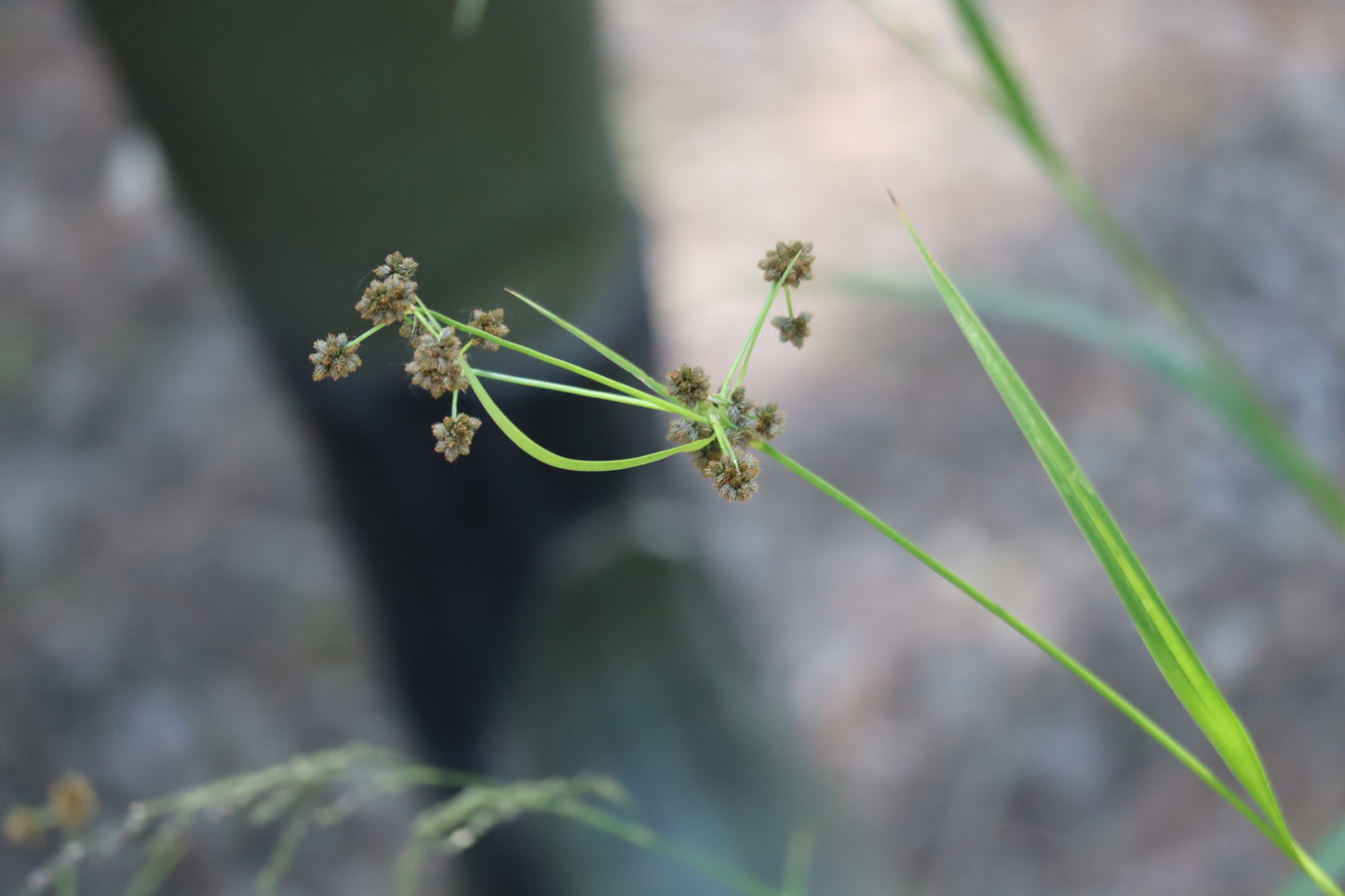
Mosquito bulrush is a graceful, clump-forming native sedge of wetlands, wet meadows, and shorelines across eastern Canada. Its most distinctive feature is its open, airy inflorescence — small spikelets held loosely apart on slender, branching stems, giving the plant a delicate, wispy quality that inspired its evocative common name. Despite its name, it neither attracts nor harbours mosquitoes; the resemblance is purely visual.
A highly versatile wetland plant, it thrives in rain gardens, ditches, pond margins, and seasonally flooded areas. It tolerates both permanent shallow standing water and periods of drawdown, making it well-suited to the fluctuating moisture conditions typical of stormwater management plantings and naturalized shorelines.
Blooming from late spring to early summer, its spikelets produce small seeds that are an important food source for wetland birds, particularly ducks and rails. Its dense clumping habit also provides cover for amphibians and invertebrates, making it a valuable component of ecological restoration and wildlife habitat projects.
Mosquito bulrush is one of the rarer native sedges in the nursery trade, making it a distinctive choice for naturalization projects seeking regional authenticity. It is native to Quebec and Ontario and is recognized by VASCAN (the Database of Vascular Plants of Canada).
Height: 50–100 cm
Light: Full sun
Moisture: Moist to wet; tolerates seasonal flooding
Soil: Tolerates clay, sandy loam, and organic wetland soils
Ecological benefits: Waterfowl food source, amphibian and invertebrate habitat, stormwater management
Couldn't load pickup availability
Share